 The US Strategic Bombing Campaign of Japan June 1944 – August 1945, Part 1
By John Dudek @ The Wargamer
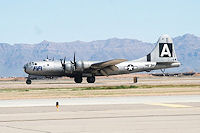
Looming out of the warm spring darkness, a bomber stream formation of 68 US Army Air Force four engine Boeing B-29 Superfortress heavy bombers made landfall well over the Japanese home island of Kyushu around midnight on 15 June 1944. The formation’s lead plane was piloted by Brigadier General Laverne G. Saunders. Japanese searchlights with their multi-million candlelight arcs snapped on ahead of them in the distance, sending up numerous probing shafts of ultra brilliant light skyward searching for the oncoming bombers. The plane’s navigator spoke. “General, we’re approaching the target and are on the bomb run.” In response. Saunders said. “Bombardier, the plane is now under your control.” “Roger!” the bombardier replied. The man sitting in the “greenhouse” glass nose of the plane and gave the “OK signal” with his hand held over his head. He then leaned over his Norden bombsight and began making minute adjustments to the plane’s course and speed; all the while fighting the only recently discovered high altitude jet stream winds that buffeted the bomber and all others in the formation. Tail winds with this speed and velocity could propel a high flying aircraft to over 500 mph while a head wind could slow their progress down to a crawl. Either eventuality could easily spoil the bombardier’s aim. The bomber’s target was the Imperial Japanese Iron and Steel Works at Yawata. Heavy but inaccurate flak artillery fire exploded brightly around the bomber stream but caused little to no damage. In addition, there were no Japanese night fighter planes anywhere in sight. The bombardier soon called out “Bombs away!” as the first of 107 tons of bombs cascaded downward towards the steel works. The bomber formation effected a long, lazy turn away from the target to return to their newly built air bases in Nationalist China. The bombing mission appeared to have been a success. However, subsequent photo reconnaissance flights sadly revealed poor results from the raid with only one bomb striking within the industrial complex due to both the high speed jet stream winds and poor visibility over the target. However, this fact was mitigated by the knowledge that the raid on Yawata was the first aerial bombing raid on mainland Japanese since the pin-prick Doolittle aircraft carrier launched air raid over two years before. The US news media was absolutely elated by the news of the Yawata bombing raid, proclaiming that this was but the first of many more air raids that would soon knock Japan completely out of the war. For once they were completely correct.
 By Eddie Makuch @ GameSpot
 Personalized campaign setup and unique in-game rewards available to all players
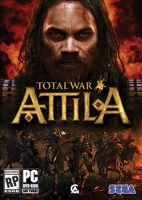 As long, bitter winters set in across Europe and crops wither in the field, the Gothic people find themselves at a turning point. Furthermore, their homelands to the west of the Black Sea lie directly in the path of Attila The Hun’s terrifying ambition. To survive, they must learn to live as wayfarers, ranging far afield in order to find a secure, more fertile home.
 Author: AkG @ Hardware Canucks
 By crazyeyesreaper @ TechPowerUp!
 Check out these latest hardware announcements for today from around the web. Also included are some hardware news bits, and on some days, a few rumors tossed in for good measure. Click on the links below to read the official press release, visit the products web page, or to an independent news source.
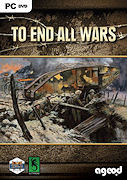 Matrix Games today announced that this Wednesday (January 14th) they are kicking off the 2015 weekly Twitch streaming sessions with To End All Wars, one of the biggest and most accurate World War One war games ever created! During this streaming session, Surtur will be playing the game, explaining basic gameplay mechanics to new players. The Ageod developers will also be present during the stream, ready to take on every question you might have.
 Source:
 “No event in American history is more misunderstood than the Vietnam War. It was misreported then, and it is misremembered now.”