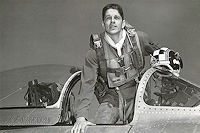
 How the shootdown of a U-2 spyplane over Cuba by a Soviet surface-to-air missile nearly led to nuclear war
By Michael J. Tougias @ Aviation History Magazine
On Friday, October 26, 1962, one day before “Black Saturday,” the most terrifying day of the Cuban Missile Crisis, CIA Director John McCone gave President John F. Kennedy more bad news about the Soviet military build-up on the island. He explained that the Soviets were spending an estimated $1 billion on their military installations and that “rapid construction activity” was continuing. More alarming was the discovery of a Soviet FROG-7 missile launch system (also referred to as a Luna-M), a tactical nuclear weapon that could be used against an American invasion or the U.S. outpost at Guantanamo Bay.
This information prompted Strategic Air Command (SAC) to authorize a Lockheed U-2 reconnaissance flight over Cuba for October 27. U.S. Air Force U-2s and Navy Vought RF-8 Crusaders had been used extensively in the prior days to photograph medium-range ballistic missile sites, SA-2 surface-to-air missile (SAM) sites and a variety of Soviet military installations and troop barracks. While the Crusaders were used for the low-level surveillance and close-up photographs, the high-flying U-2s could cover a much broader area with their high-resolution cameras.
 Legendary Zero pilot Saburo Sakai was Japan’s most recognized ace, but few knew the man behind the legend
  Near an abandoned French farm in 1918 field telephones crackled with orders in a language that baffled German eavesdroppers—and the code talkers were born
 The story of the B-17s that arrived over Hawaii during the Japanese attack has been told many times, but what happened to them?
 After World War II, fallen American service personnel rode the rails to their resting places
 Although obsolescent even before World War II began, the Ju-87 Stuka terrorized ground troops and found a late-war niche as a tank-buster.
 By Steven Trent Smith @ Historynet.com
 By Joseph Conner @ Historynet.com
 How Barry Sadler’s “The Ballad of the Green Berets” became the No. 1 single of 1966.
 Outnumbered and outgunned, the Marine pilots of VMF-221 paid a heavy price for their heroic efforts to stem the Japanese onslaught on Midway Atoll