
|
Navigator's Diary: 487th Bombardment Group, B17
by Norman K. Andrew. Introduction by Bob Holliday |
||||
|
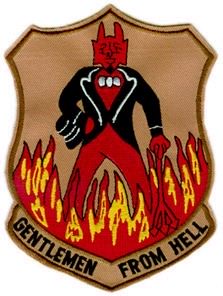
INTRODUCTION When Adolph Hitler began his conquest of Europe in 1939, he began to turn that continent into "Festung Europa"...Fortress Europe. The lone hold-out against the Third Reich was the island nation of Great Britain. In the summer of 1940, the Royal Air Force defeated the Luftwaffe in "The Battle of Britain" and Britain survived to become the launching point for the Allied war against the Nazis. Until sufficient forces could be built up to attack Fortress Europe's walls, the Allies took to the war on wings, for Hitler had built a fortress without a roof. Early in 1942, the American 8th Air Force began arriving in England to help the British with strategic bombing of Nazi manufacturing, transportation and military targets. The RAF bombed by night, the 8th by day. Thus began one of the greatest conflicts of human history...the air war over Europe. The Eighth Air Force faced a formidable opponent - the Luftwaffe, with outstanding equipment and training, and more importantly, they were battle-tested. By the end of the war, the air battles that involved thousands of bombers and fighters, claimed over 26,000 American lives. This accounted for 10% of all American deaths during the war. 18,000 airmen were wounded and over 28,000 were shot down and captured. One of the many groups of the Eighth Air Force sent to England to participate in this enormous struggle was the 487th Bombardment Group (Heavy), The Gentlemen From Hell. This story is dedicated to the airmen and ground crews of that group, and to all who served. This article is reprinted from the web site of the 487th Bombardment Group. FOREWORD I was copilot on a B-17 and, since Jack Stanley, our pilot, had more than average experience, we eventually found ourselves on a lead crew. We led squadrons, groups, wings, even the entire Third Division once. Naturally, my navigator, Norman K. Andrew, or Andy as we called him, had to have superlative skills, and he did. Andy was 28; I was only 22. He was from Houston, every bit a Texan, and loved to talk about his days in the oil drilling tool business. Fortunately, I was a good listener. Andy is no longer with us but recently his daughter Kathy sent me his original diary in three closely-written volumes. Andy had a broader view of the air war over Europe than I did. While I flew, or watched instruments, Andy watched the landmarks, the flak sites, the enemy fighters, and what was happening to other groups. I think his diary is extremely worthwhile as a detailed record of what went on up there. It demonstrates how difficult it was to coordinate a huge stream of bombers with their human and explosive loads through weather, enemy action, mechanical and electronic failures, and human errors, to the targets. Sometimes we had to turn back without bombing anything; other times we bombed "targets of opportunity." One way or another we almost always dropped our bombs. 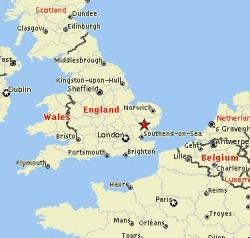 We were stationed at Lavenham, England, about 35 miles east of Cambridge. We belonged to the 837th Squadron, 487th Bomb Group, 4th Wing, 3rd Division of the Eighth Air Force. We arrived as replacements in July when the older crews were still talking about D-Day, and flew our first mission in August. Due to the weather there were sometimes weeks between missions. When we weren't training we found time to explore London, Cambridge, Bury St. Edmonds, and Lavenham. I have focussed on the actual missions here. |
 I was proud to have been part of this action and I am proud to present Andy's view of it all. He was an unforgettable person.
Bob Holliday NOTES ON ORGANIZATION A squadron would mount a formation of 13 aircraft; a group had 3 squadrons and would mount 39 aircraft; a wing had 3 groups; a division had a number of wings. The 1st and 3rd divisions were B-17s; the 2nd division was B-24s. Squadrons flew in a vee formation with the left one higher and the right one lower than the lead squadron. It was important to fly a tight formation for maximum protection from fighters, but a frontal attack with 20mm guns could be deadly. The normal B-17 crew was 11 men; lead crews usually carried more than that, what with Air Leaders, special navigators, and special bombardiers. Only the lead and deputy lead aircraft carried Norden bombsights; others toggled their bombs when they saw the lead ship drop its bombs. The 13th ship in a squadron was "tail-end Charlie," a vulnerable position. Lead crews flew fewer total missions because they were the "aiming points" and were more frequently shot down by flak and fighters. Also, they flew more practice missions. We were in England for 9 months compared with an average of 4-5 months for wing crews.
A GLOSSARY OF SORTS Andy used many abbreviations and technical terms. I have tried to explain them below.
5/10ths, etc. - fraction of cloud coverage Go to Part II: The Diary
|
|||
|
Copyright © 1997 - 2000 COMBATSIM.COM, INC. All Rights Reserved. Last Updated July 27th, 1999 |
||||