| Cold Steel: EAW Aircraft by Jim "Twitch" Tittle |
||||
|
A rear gunner controlled a pair of 13mm machine guns in remote barbettes. Up front the bomb bay for light ordnance, had become a true weapons bay with a vast array and mixture of heavy guns and rockets. 8cm., 21cm., 30cm. rockets and 20mm., 30mm. and 37mm cannon were used. A 50 millimeter cannon was used in one model. II/ZG 26 ace Hauptman Tratt scored 38 victories in zerostorers. Lt. Rudi Dassaw mounted no less than eight 20mm's on his 410.
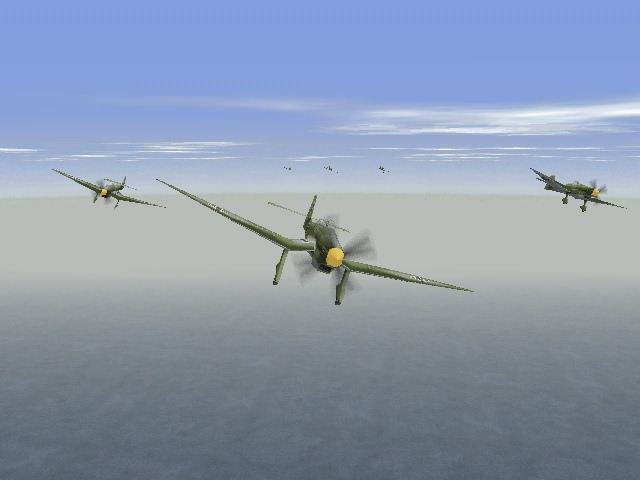
JUNKERS JU 88A The first JU 88 flew in 1936 and before the war ended over 15,000 had been produced. The "A" alone had sub-variants up to A-17. Confusing sub-models to these had alternate designations too. The A-4 model is very representative of the line. It used two Junkers Jumo 211J-1 V-12s of 1,350 h.p. engines. It could manage 273 m.p.h. at 17,500 feet and 1,980 miles with maximum fuel. It took 23 minutes to attain 17,500 feet. Bomb load was 2,200 lbs. normally but it could max out for short hauls with two 2,200 lb bomb on inboard shackles and two more 1,100 pounders on the outboard ones. A crew of four defended with mostly 7.92mm hand held guns and sometimes a forward firing 20mm. The tropicalized A-4/Trop was used in the Western Desert. JUNKERS JU88C The "C" was conceived as a Zerostorer, or heavy fighter. Like the Bf 110, it was not formidable enough to hold its own in daylight operations with Allied fighters. Using FuG onboard radar array in the solid nose reduced top speed from 311 m.p.h. at 19,685 ft. by 25 m.p.h. Two Jumo 211-Js of 1,410 h.p. propelled it to a 32,480 foot ceiling and a climb rate of 1,770 f.p.m. Three 20mm cannon and three 7.92mm guns were fixed in the nose and a 13mm swivel mount defended the rear. A 20mm could be mounted at an oblique, upward angle as well. HEINKEL HE 111 For an aircraft that was so sleek and modern looking in 1935, just five years later it would struggle to survive missions, obsolete. As with most of the German airframes, the 111 would morph into a staggering collection of variants used everywhere. The "P" model is atypical of the Battle of Britain with a top speed of 247 m.p.h. at 16,400 ft. coming from two Junker Jumo 211F-2s of 1,015 h.p. powerplants. It had an adequate for the time ceiling of 25,500 feet coupled with a 1,490 mile range. It could carry 3,300 lbs. of bombs and was a fine torpedo bomber with two standard "fish." Assorted 7.9mms and a 20mm comprised the armament for the crew of five. JUNKERS JU 87 STUKA Even non-aircraft enthusiasts recognize the ungainly Stuka. The fixed landing gear covered with spats, the gull wing, the squared edged design all make the JU 87 unmistakable. The Blitzkreig (lightning war) and Stuka are forever entwined in history. The JU 87B was used during the Battle of Britain after stunning triumph over ill equipped airforces and armies earlier. With its dive brakes extended it could float down at 150 m.p.h. and bear in on a target with total precision and dropping its 1,100 lb bomb load. |
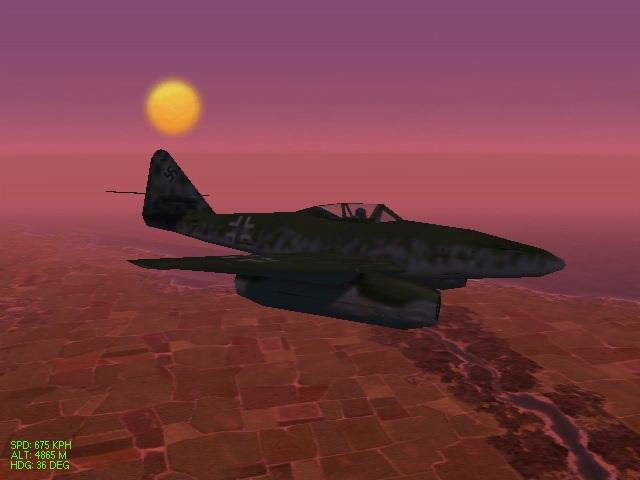
The 1,100 h.p. Jumo 211Da V-12 could manage 238 m.p.h. at 13,410 feet clean. Its ceiling of 26,250 ft. was rarely visited since it was always used in low, close in attack. The pilot had two 7.92mm guns at his disposal and a usually short- lived rear gunner had one also. The pilot got an additional two 20mm cannon in later models. It was a rugged bird but no match for the fighters of its day. MESSERSCHMITT ME 262A-1a SCHWALBE (Swallow) "It was like angels were pushing," was General Adolph Galland's remark after his first flight in the 262. Indeed the 540 m.p.h. twin jet interceptor ushered in a new era of air combat. Though not powerful by today's standards, the Junkers Jumo 004 turbojets generated 1,980 lb. thrust enabling the bird to climb at 3,937 f.p.m. But the key element was the four MK 108 30mm cannon in the nose. One hit could bring down an Allied bomber. If that wasn't enough, the 24 R4M rockets salvoed like buckshot, from beyond gun range, made it possible to hit multiple targets or cause enough chaos to instigate mid-air collisions. The crude- by-today's-standards turbines required constant maintenance and pilots fiddled with the throttles to find a setting where the often balky jets worked smoothly. Once set they would leave them alone and fly at that constant velocity, make their runs through the gauntlet of bomber fire, and hopefully survive. There were 22 jet aces that flew the 262 with units such as Galland's JV 44 in the latter days of the war. Heinz B„r led with 16 kills. The popular myth was that if Hitler had not made some of them bombers, things would have been different. Galland states that, save for bomb shackles, all 262's were true fighters. It was just too little too late. Had it debuted a year earlier, in numbers, perhaps daylight bombing would have suffered. V-1 (FIESELER FZG-76) "Vergeltungwaffe" is the word for it; vengeance weapon. They were launched from rails on land and by He 111s in the air. They created fear in their target in 1944 England. This giant leap of technology was the first cruise missile really. With a span of 17 feet and length of only 25, the V-1 was packed with a 1,870 lb. warhead. The Askania auto pilot was able to steer the bomb only accurately enough to reach the city intended, not specific buildings or even blocks. With an Argus 019-014 pulse jet engine, the V-1 could make 350 m.p.h. traveling between 300- 2,500 meters. With a gyroscope, altimeter and compass working in concert with control links and servos the thing flew up to 160 miles before the simple distance counter signaled it was at the pre- determined range. The elevators were depressed and the bomb went into a sudden dive pulling fuel away from the motor. The rude sounding motor would cut off warning victims that the V-1 was in its final phase before detonation. Some were shot down by fast fighters and some were tipped out of control during a wing to wing maneuver. Some 20,000 were launched and about 50% made it to England. There was a piloted version of the FZG-76 intended for suicide use but the program did not see fruition.
|
|||
|
This material is copyrighted and may not be reprinted in any form without
permission of the publisher.
Last Updated November 1st, 1998 |
||||